World Piano Day: Celebrating the artistry of live music and dance
March 29, 2026
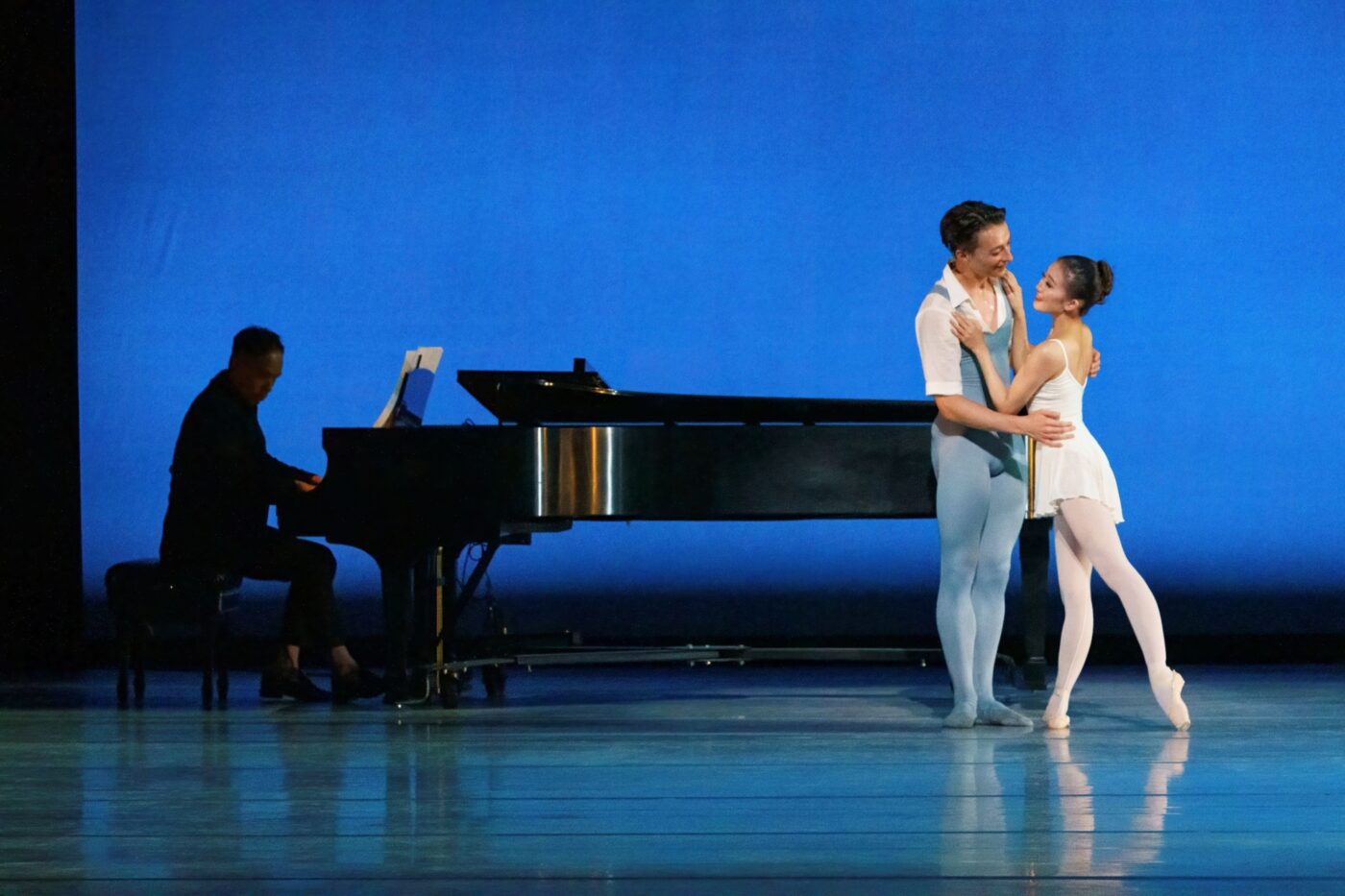
In celebration of World Piano Day, Atlanta Ballet spoke with Company Pianist Western-Li-Summerton, who will perform live on stage for Yuri Possokhov’s world premiere, Dunayevsky Pas de Deux. The piece is one of several vignettes featured in the Golden Hour mixed repertoire program, running April 3–5, 2026.
Isaak Dunayevsky’s musical compositions stand out for their vibrant optimism and rich emotional tapestry, seamlessly blending elements of Soviet mass songs, jazz, and classical traditions. Renowned for his work in both film and opera, Dunayevsky’s scores evoke a dramatic resonance that captivates audiences. The technical challenges of performing his works, however, particularly in a ballet setting, demand not only skill but also a profound connection between musicians and dancers, creating a dynamic interplay that enhances the overall performance.
Isaak Dunayevsky created popular, optimistic scores for iconic films, blending Soviet mass songs with jazz and classical influences. How would you describe Dunayevsky’s musical style?
Drawing from his work in film and opera, Dunayavesky’s musical style can be described as dramatic, featuring strong and vivid moments. The emotions conveyed in his music are clear, whether expressed through a bombastic overture or a melancholic lyrical duet.
What elements do you think make Dunayevsky’s melodies so memorable and enduring?
I think Dunayevsky’s melodies are memorable largely due to his experience writing for opera and film. The song-like quality of his compositions is accessible to all audiences and easily digestible by the ear.
The piece is very fast and technically demanding, requiring great stamina and athleticism from the dancers. What are the main challenges in performing it?
The main challenge for me lies in capturing the musical character and intention of each musical movement while supporting the dancers. The music of the adagio is romantic and lyrical, characterized by long, sweeping phrases filled with passion and rubato. In contrast, the second movement, the women’s variation, is a fiery and technical waltz, while the men’s variation is fun, boisterous, and filled with bravado.
The coda serves as the thrilling finale of this pas de deux and is sure to amaze audiences with the athleticism displayed both on stage and at the keys. Originally, the coda was an overture written for orchestra, and as ballet pianists, we often need to recreate the orchestra's sounds at the piano. In this coda, I strive to replicate the brightness of the brass, the haunting lyricism of the strings, the flitting runs of the winds, and the impact of the percussion.
How are you working with the dancers to adjust tempo and shape phrasing in a way that supports the choreography?
Each dancer is nuanced by how they perform the choreography.
During rehearsals, I examine how the music can support these nuances and their choreographic needs, considering where dancers might need a breath, how articulation accentuates different movements, and what tempo captures the choreographic intention.
Are there specific technical moments or movements where emphasizing the musical beat becomes especially important?
There are certain technical moments, such as lifts or specific choreographic poses, where the musical beat should feel very synchronized with the movement. This may involve focusing on the preparation of a beat or accent and pacing the time leading up to climactic moments. At other times, how the beat is played and its correlation within the phrase becomes crucial.
How do you support the dancers during a live performance on stage?
With this pas de deux accompanied by solo piano, I provide the musical narrative that guides them. As I play, I stay attuned to how they respond to the music in that moment.
This is not your first time accompanying dancers with Atlanta Ballet. Can you share more about your previous experiences in this role?
I have been privileged to work with Atlanta Ballet dancers in various settings. Earlier this fall, I performed the dynamic Philip Glass score for two pianos with Dr. Rachel Chung of Spelman College. In past years, I have collaborated with our principal cellist, Charae Krueger, and concertmaster, Lisa Morrison, on Sergio Masero’s Querencia, as well as performing as a solo pianist in Ben Stevenson’s Three Preludes.
In addition to accompanying dancers on stage, I also play for their daily morning company classes and rehearsals. This past February, I had the opportunity to work with conductor Ari Pelto while accompanying rehearsals for Giselle. I thoroughly enjoy collaborating with our conductors on full-length ballets and bringing the piano transcriptions of large orchestral works to life.
How excited are you to provide live piano accompaniment for Dunayevsky Pas de Deux?
I am excited and grateful for the opportunity to provide live piano accompaniment for Dunayevsky Pas de Deux. After witnessing stunning works by Yuri Possokhov, such as Classical Symphony, Firebird, and, of course, The Nutcracker, I feel incredibly lucky to be part of this new work. The format of pas de deux with solo piano is seen throughout ballet, and Possokhov Dunaevsky Pas de Deux contributes to the genre in an exuberant manner. Additionally, I am thrilled to be part of an eclectic program featuring works by the amazing choreographers Claudia Schrier, Val Caniparoli, and Christopher Wheeldon. This production promises to be both visually and musically captivating.
Celebrate the artistry of live music and dance this World Piano Day! Live piano accompaniment brings a unique immediacy to ballet - allowing timing, emotion, and musical phrasing to shift in real time with the dancers, making every performance truly one-of-a-kind. Experience it for yourself with Atlanta Ballet’s Golden Hour, featuring Company Pianist Western-Li Summerton performing live on stage for Yuri Possokhov’s world premiere, Dunayevsky Pas de Deux. The program also includes works by Val Caniparoli, Claudia Schreier, and Christopher Wheeldon in an unforgettable lineup of contemporary ballet. Don’t miss this extraordinary fusion of music and movement in Golden Hour, at the Cobb Energy Centre from April 3-5, 2026.