Red, White, and Ballet: Celebrating the Fourth of July with Balanchine’s Stars and Stripes
June 29, 2026
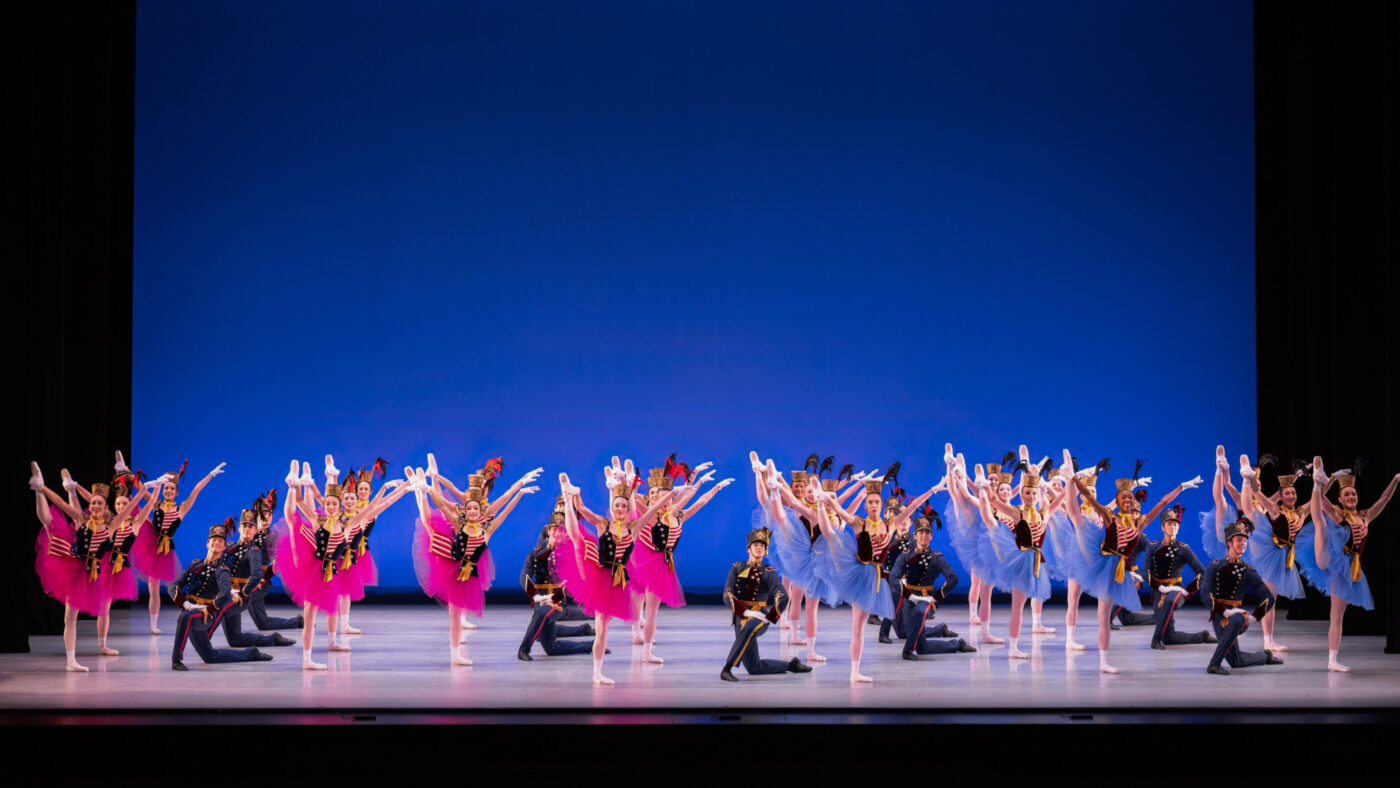
The Fourth of July wouldn’t be complete without fireworks — and few are more dazzling than the balletic fireworks of Stars and Stripes, George Balanchine’s quintessential all-American ballet.
Bursting with devoted spirit, dazzling precision, and infectious energy, this crowd-pleasing masterpiece captures the excitement and pageantry of Independence Day. Set to the rousing marches of John Philip Sousa, Stars and Stripes is a vibrant celebration of American pride that brings audiences to their feet year after year.
As the nation commemorates the 250th anniversary of its founding, Atlanta Ballet is delighted to open the 26|27 season with George Balanchine’s Stars and Stripes. This spirited masterpiece is featured on the Passion & Pride program at the Cobb Energy Performing Arts Centre, September 18–20, alongside the world premiere Plagued Houses by Melissa Hough, and Significant Others by Remi Wörtmeyer.
Described by George Balanchine simply as being about “the United States,” Stars and Stripes reflects the choreographer’s deep affection for his adopted country. Balanchine became an American citizen seven years after arriving in the United States in 1933, an arrival that marked the beginning of his legacy as the “Father of American Ballet”. Stars and Stripes, first premiered at the New York City Ballet in 1958, stands as a vibrant expression of his admiration for the nation he came to call home.
For Balanchine, no music better captured the American spirit than the rousing marches of John Philip Sousa. Long inspired by their vitality and exuberance, he dreamed of creating dances to accompany them. The result was Stars and Stripes — a dazzling display of virtuosic ensemble choreography, crafted with both knowing wit and deep affection for the nation that inspired it.
Balanchine repetiteur Paul Boos returns to Atlanta to stage Stars and Stripes, having last visited in 2025 to oversee George Balanchine’s Prodigal Son. Ahead of this spirited production, Atlanta Ballet spoke with Boos about the spectacle, precision, and flair that make this ballet such an enduring audience favorite.
Stars and Stripes is famous for its relentless pace and athletic demands. How do dancers prepare for the physical challenge, and what does it take to sustain that level of energy throughout the performance?
New York City Ballet is known for its distinctive New York City Broadway energy. We were trained with the daily mantra, “What are you saving it for?” Dancers have a general sense of their limits, but after working with Balanchine, we found we had so much more to give. His daily training classes were tests of strength and endurance.
Balanchine structured Stars and Stripes
into five distinct "campaigns." What makes each campaign unique?
The featured performers in each campaign were dynamic combinations of talent and personality. Atlanta Ballet’s former Artistic Director Robert Barnett was the men’s regiment leader. What a powerhouse! He had served as a real-life soldier, so the role fit him like a glove. The women’s regiments were led by Allegra Kent and Diana Adams, both quintessential American beauties. Kent was spirited and playful, while Adams embodied the glamorous star image of the period, reminiscent of Ann Miller. Although George Balanchine rarely told dancers exactly who their characters were, in this case he told Melissa Hayden and Jacques d'Amboise that they were Ike and Mamie Eisenhower. The pair embraced the idea and ran with it.
Is there a particular passage, surprise, or theatrical flourish that you think audiences should keep an eye out for?
When I was a kid, my teacher answered one of my questions by pressing her tongue against the inside of her cheek. I had no idea what that meant. Well, this ballet is a playful parody of classical ballet, complete with the occasional prop that seems to have come straight from a Fourth of July parade. Tongue in cheek, if there ever was one.
Stars and Stripes playfully incorporates elements of military drills, majorette routines, and even the can-can. How does Balanchine weave these influences into the choreography while still remaining true to classical ballet?
You’re asking what makes a person a genius: words for authors, paint and pencils for artists, notes for composers. For Balanchine, the elements were the same whether he was choreographing a swan or a majorette. He could transform anyone into anything using the vocabulary of classical ballet.
What do you think makes Stars and Stripes such an enduring crowd-pleaser nearly 70 years after its premiere?
Mr. B was an entertainer at heart. There were times when he took himself very seriously and others when he simply had fun. I would say that Stars and Stripes is one of his ballets that was intended to lift people’s spirits. When he emigrated to the US, he worked on Broadway and Hollywood with the Ziegfield Follies. He understood spectacle, and who doesn’t love a spectacle?
Stars and Stripes by George Balanchine will light up the stage at Cobb Energy Performing Arts Centre as part of Passion & Pride, September 18–20, 2026. Tickets to Atlanta Ballet’s 26|27 season opener are available now.
Happy 250th Independence Day from all at Atlanta Ballet!
Choreography by George Balanchine © The George Balanchine Trust.
Kansas City Ballet dancers. Photography courtesy of Kansas City Ballet.