Golden Hour: Illuminating the artistry of contemporary ballet
March 3, 2026

As the sun sets and rises, the golden hour casts the familiar in ephemeral light before returning it to what it once was. Dance lives in much the same way: a live performance, able to be repeated but never quite duplicated, is a fleeting presentation of a time-intensive and deeply loved process of creation and collaboration in the studio, immersed in inspiration, refinement, and discovery.
Val Caniparoli, choreographer of Aria, asserts that “music is number one,” expanding, “it is absolutely central to your work, not secondary… It is not the steps I first think of. I am most inspired to create by being in the room with the dancers and the music.” Caniparoli’s relationship to music is more than foundational it is integral. Having studied it since early childhood, he attended Washington State University for music and theatre. His performance and choreographic career unfurled — just shy of two years into formal training — after joining the San Francisco ballet which later became his artistic home for more than five decades. Throughout his choreographic repertoire, his musical choices reflect this deep engagement and disciplinary knowledge, informing his use of diverse scores as the principal foundation of his work.
In Dunayevsky Pas de Deux, a world premiere by Yuri Possokhov — San Francisco Ballet’s Choreographer in Residence and the choreographer of Atlanta Ballet’s The Nutcracker — music and dance share the stage in harmonious collaboration with live piano accompaniment, making the synergistic relationship between musician and dancer visible in real time. Reflecting on his experience working with Atlanta Ballet and its company pianist, Possokhov notes, “the combination of dance and live music, it elevates our soul.”
Loosely based on the 1964 short story of the same title, Swimmer dives into the psyche of a mid-century American man determined to swim home through his neighbors’ pools. Introduced to the story in the early stages of his relationship with his wife, Possokhov abstracted the tale, making it increasingly introspective and allowing narration and abstraction to coexist. The swimmer journeys as the day fades, navigating life’s currents and confronting fragments of memory, only to return to a home that no longer exists. In this program, excerpts Lolita and Nighthawks are presented as vignettes. Ultimately, Possokhov reminds us that we are all swimmers — traveling through one another’s lives, absorbing and reshaping what we encounter as it informs our own identities.
Claudia Schreier — Atlanta Ballet’s Choreographer in Residence since 2020 — has a creative process in which music becomes the current that guides movement. “When I am creating, I start with the music,” she explains, “and I listen to it more times than you could’ve imagined… from that, I can then start to detail what movement qualities are coming out.” Collaboration becomes the means by which it takes shape. Reflecting on her first work with Atlanta Ballet, First Impulse (2019), Schreier noted, “the work that I do can’t exist without the bodies on which I create, and when those dancers are part of the creative process in a collaborative way that respects my original intent… that’s really the best you can ask for. I come in with set ideas knowing full well that they will morph and change.” For Schreier, choreography is not imposed but discovered and shaped in the studio through the dancers’ instincts.
Coming off her world premiere of The Rite of Spring earlier last season, telling the story of community and human struggle against nature’s inexorable forces, Schreier retains the same investigative mindset. Taking the title You Dig from activist and composer Julius Eastman’s poem Stay On It, she draws inspiration from a score that functions as a driving manifesto, a call to action, a praise of perseverance in the face of adversity, and above all, a joyful rebellion.
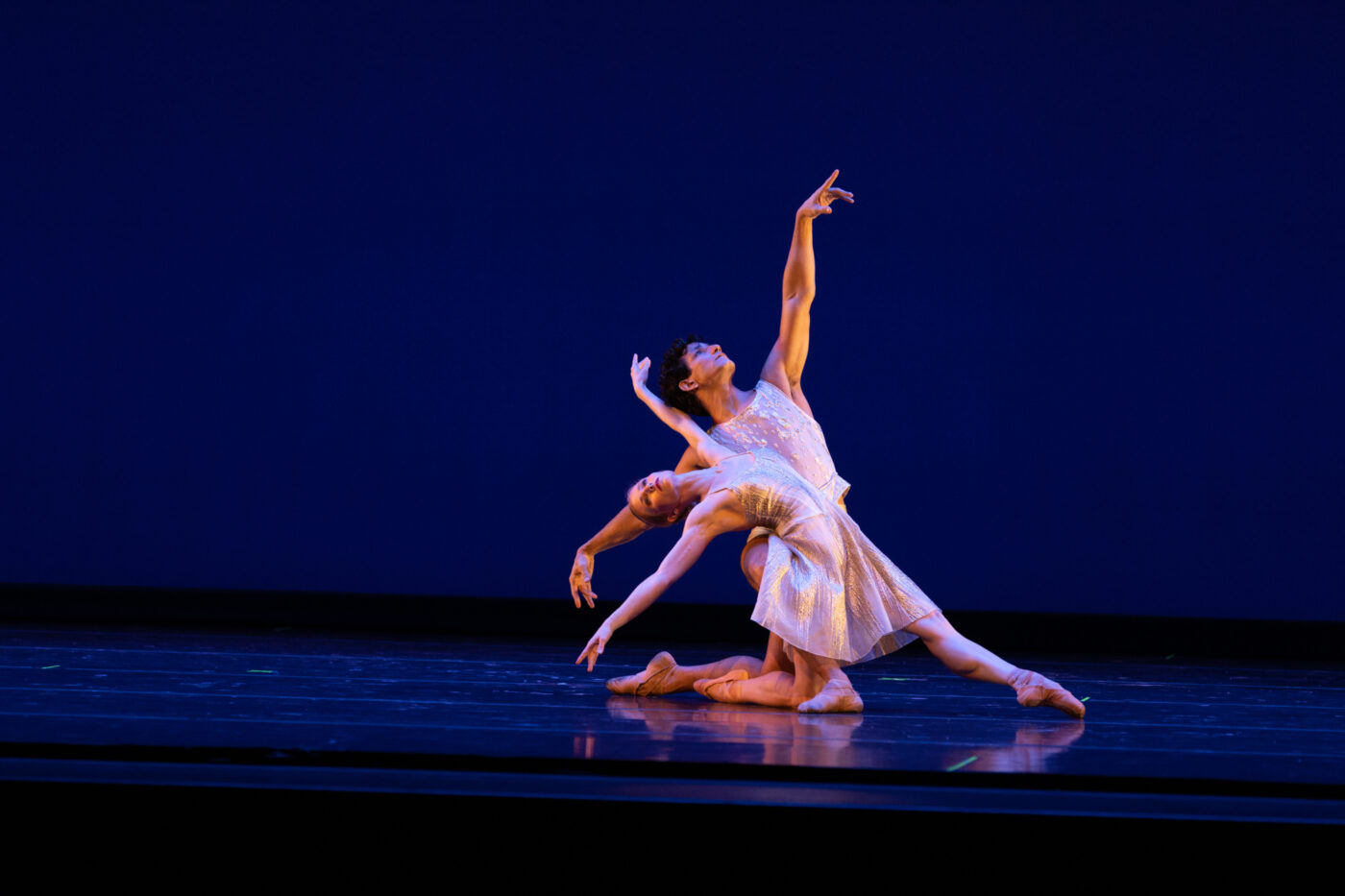
Christopher Wheeldon’s abstract work Within the Golden Hour, inspired by Gustav Klimt, alternatively asks the audience to turn their gaze inward. A leading figure of the Vienna Secession at the turn of the 20th century, Klimt is best known for works such as The Kiss and for his use of gold leaf, flattened perspective, and intricate ornamentation, dissolving the boundary between bodies and the decorative space surrounding them.
Wheeldon, an Artistic Associate of The Royal Ballet, describes his ballet as a journey through a diaphanous exhibition, much like the gallery of Klimt’s paintings that first inspired him. He presents shifting groupings, relationships, and vignettes for the audience to absorb rather than decode. As he explains, “The beauty of an abstract ballet is that the audience gets to find their own story, find their own truth in the piece… do not fight the beauty, because that is all this ballet is meant to be.”
Together, these works reveal the breadth of contemporary ballet. They span narrative and abstraction, bridging classical and contemporary styles all while exploring various genres from folk to jazz through a curated mix of world premieres and celebrated repertory. Through Possokhov, Schreier, Caniparoli, and Wheeldon, this program becomes a series of striking vignettes, distinct voices united by process and illuminated for a brief moment in time. Like the golden hour itself, it is fleeting, brilliant, and unfolding now.
Tickets to Golden Hour are on sale now. From April 3-5, 2026, at the Cobb Energy Performing Arts Centre.
Program notes by Margaux Nicolas.