Exploring the Music of Frida with Composer Peter Salem
April 22, 2026
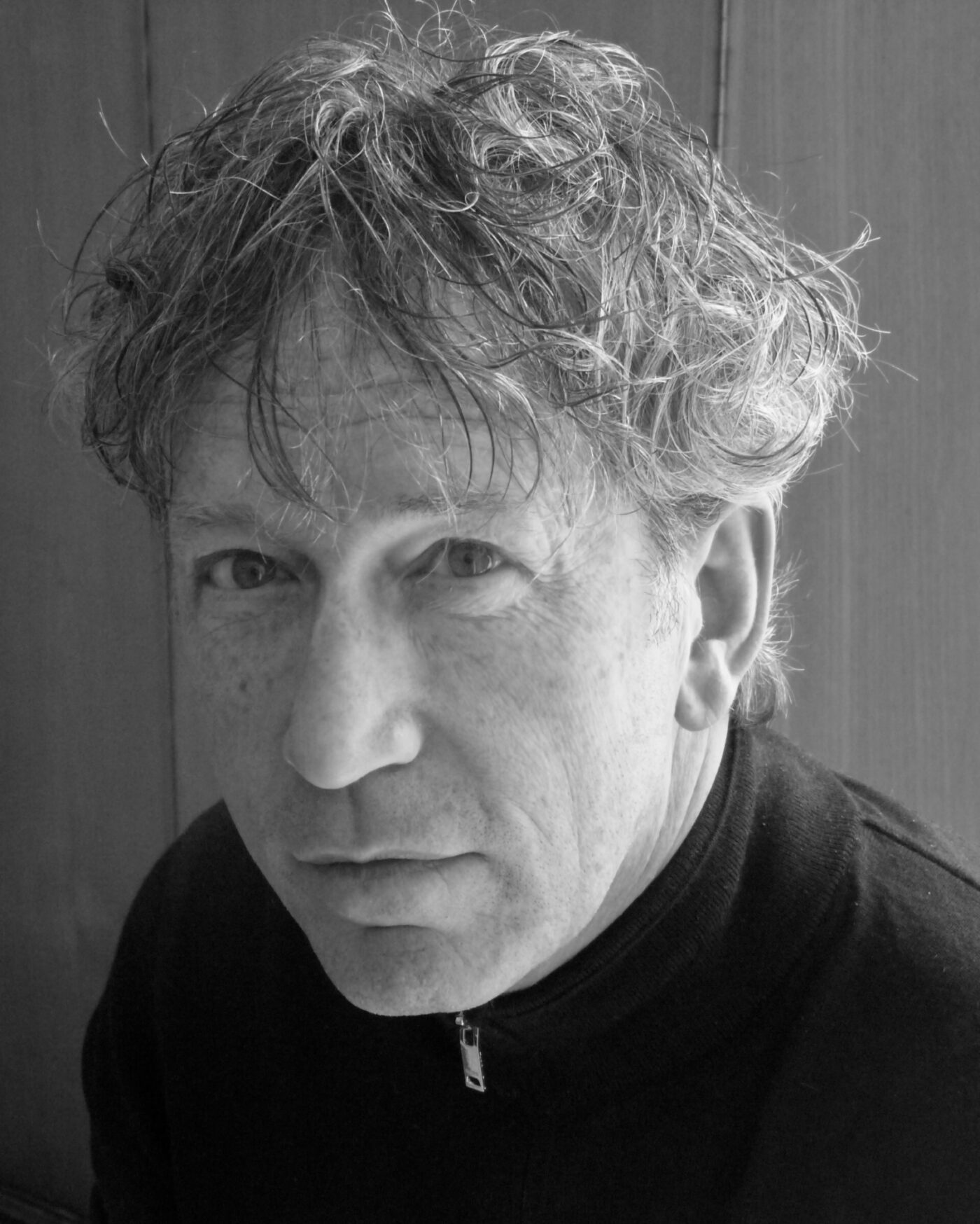
With just over two weeks until Atlanta Ballet’s season finale - the highly anticipated southeastern premiere of Frida by Annabelle Lopez Ochoa - we spoke with composer Peter Salem about his creative connection to Frida Kahlo’s story. He described a score that echoes her pain, resilience, and striking individuality. By weaving traditional Mexican sounds with contemporary elements, he shaped a musical landscape that reflects both the richness and complexity of her life and illuminates her story with nuance and depth as it unfolds on stage.
What was your inspiration for the Frida score?
The inspiration for the score fundamentally came from the life and paintings of Frida Kahlo. Her art encompasses so much of her life, depicted through the vivid colors and directness of expression which define her style. The imagery in her work reflects not just her personal experiences but also Mexican culture, which is deeply intertwined with her identity and the persona she crafted. To better understand her world, I did a lot of research, reading her diaries, sketchbooks, and even a diary/cookbook by her stepdaughter from Diego Rivera’s second marriage - from which I tried my hand at making a chocolate mole! - which all combined to shape my perspective and inspiration for the score.
How did you translate Kahlo’s visual language and Mexican cultural influences into music?
I was really struck by how immediate and direct Kahlo’s paintings feel. Though deceptively attractive I would say her work is never sentimental. It addresses you directly, there is no softening of the subject matter or of what she is trying to convey and the result is incredibly powerful. When I thought about translating that visual language into music, I wanted to capture its vibrancy and energy through the orchestration and the rhythmic energy of the writing. I also wanted to reflect Mexico’s rich culture in my choice of instruments. The marimba, guitar, and harp and a wide range of percussion instruments are at the heart of the sound. I explored and was influenced by many different styles of Mexican music but l was always determined to avoid pastiche. I wanted my interpretation to be respectful and informed and to focus on expressing the essence and color of the sound-world of Mexico rather than literally presenting its music. Interestingly, Frida was on her own journey to define a Mexican identity, as were many in her creative circle, which put me at ease in a way. Many sought to reconnect with an Aztec heritage, yet the reality is that none of us really knows what that world was like, especially in terms of its music. A friend of Frida and Diego’s was the composer Carlos Chávez who wrote European art music influenced by Stravinsky incorporating Mexican folk melodies and using Indigenous Mexican percussion instruments particularly in his most well-known composition, a piece called Sinfonia India. I felt I was on a similar journey. Much of what we think of as Mexican music has strong European and Spanish influences. Trying to reproduce the essence of the more ancient indigenous music of Mexico has to involve a degree of speculation. I imagine that looking to Peruvian and Native American Indian music gives us a clue to its most ancient roots.
How did you navigate authenticity versus artistic license? Were there moments when you pushed against tradition?
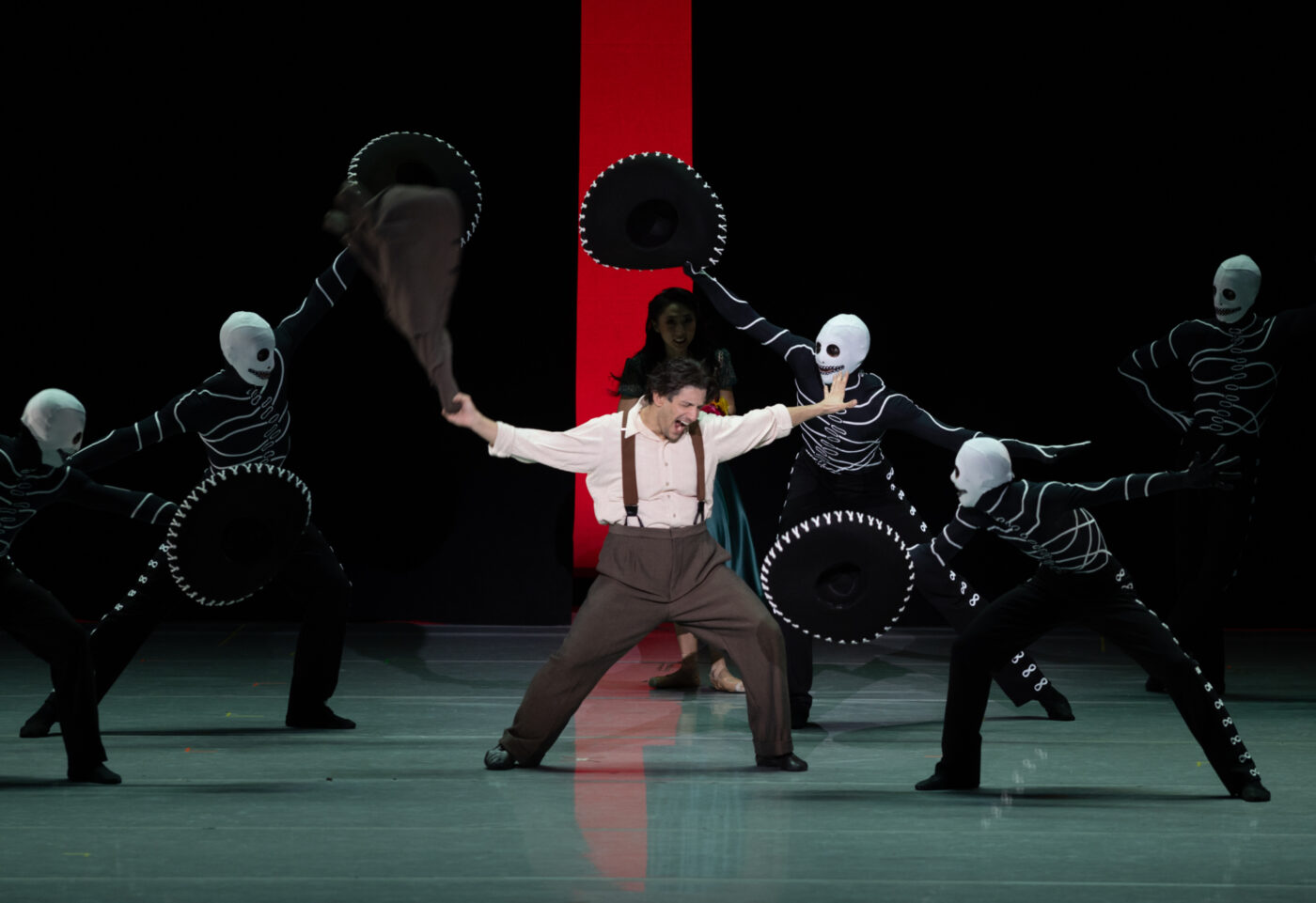
I would say my music for Frida is informed by the music of Mexico rather than in any way being an attempt at an authentic presentation of Mexican music (that is something I wanted to avoid and which I leave to the songs of Chavela Vargas to supply). The closest I get to authenticity is the Mariachi in Act II, which does aim to be as authentic as possible, representing a street band as Diego dances with Frida’s sister. Despite a few liberties to make it sound as raw as possible it is a very close take on Mariachi style which gradually transforms into something more abstract as the scene develops, highlighting the growing horror and anger Frida experiences discovering the two of them together. The last thing I wanted to do here was to present a clever or ‘highbrow’ (and inevitably self-conscious) contemporary take on Mariachi which would have weakened its power.
Artistic license is definitely something I use when trying to capture the essence of an ‘ancient music’ within the score, for example in the opening scene of the ballet called ‘Roots.’ Here I combine something informed by Peruvian/Native-American music with music inspired by European Klezmer! Many of Frida’s paintings are concerned with her roots (including umbilical cords linking her to her European, Mestizo and Aztec ancestors as well as clothing and artefacts from the Aztec period) and in this scene as she emerges at the start of the ballet I am playing with the idea of her complex if not entirely accurate lineage - her Mestizo, and German-Hungarian-Jewish roots. In fact her claim to Jewish heritage is a fabrication - artistic license on her part as the music for this passage is on mine!
Is there a central instrument or sound that anchors the score?
The harp plays a crucial role in this piece, and that is the instrument I associate most with Frida Kahlo. I was inspired by the Jarocho Harp style, which has a rhythmic quality and a unique, edgy technique. I wanted the harp to capture that spirit in this score, deviating from the softer edged, more ‘phrased’ style you often hear in European classical music. Frida is often likened to a bird, Diego to an elephant. This dynamic suggested to me a sense of lightness with the harp, which is then balanced by the deep-rooted energy of drumming, connecting Frida to the earth. It feels quite rich and fundamental. Diego is the Trombone!
Were there any sounds or instruments you rejected because they felt too obvious or reductive?
No, I just went for it and experimented with everything but the kitchen sink, including a bicycle!
Yes, we’ve heard about the bicycle wheel. Can you tell us more about that choice?
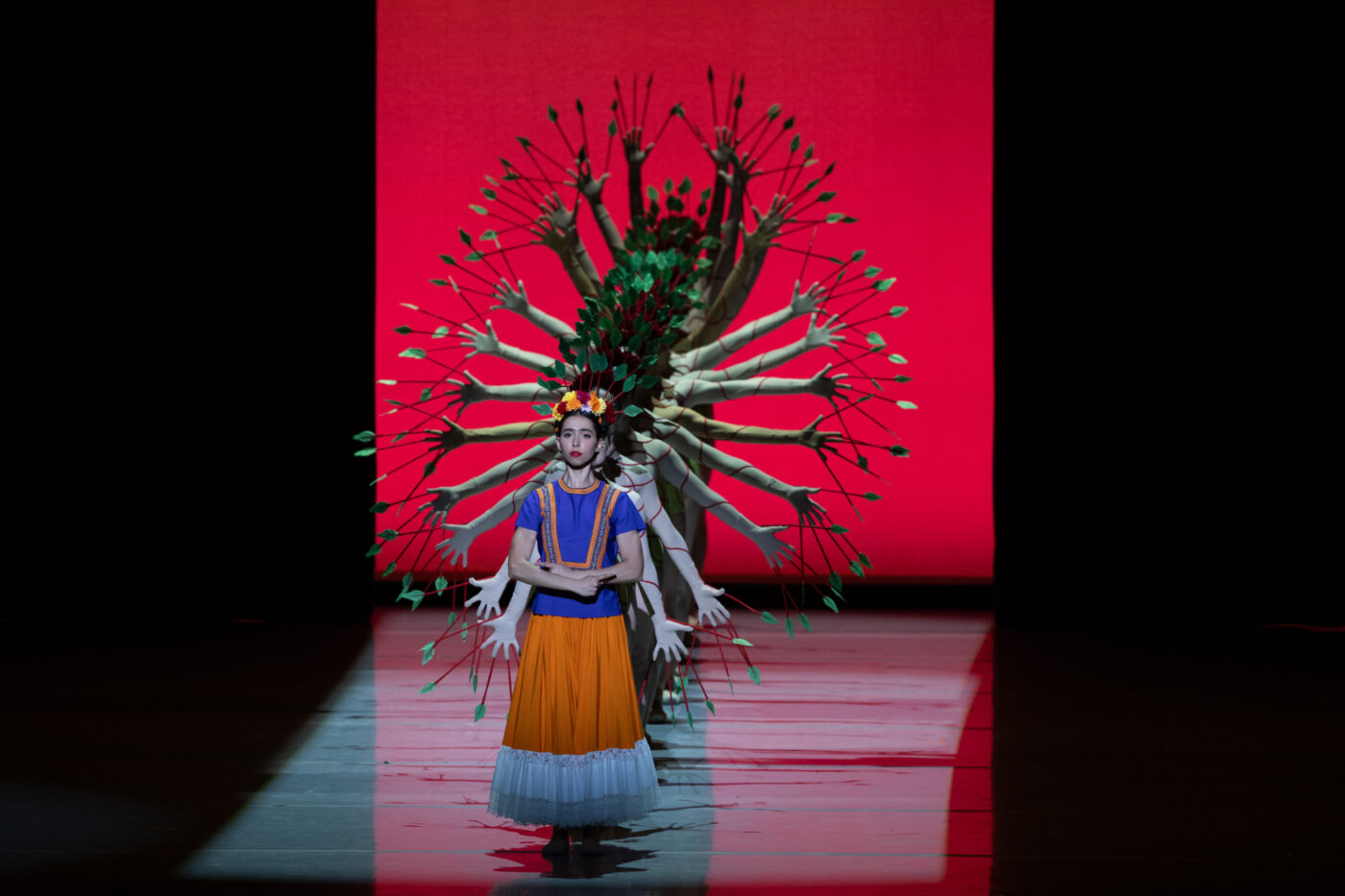
It’s been a really useful discovery for this score, especially in the scene following Frida’s miscarriage where nature steps in as a supportive force, guiding her back to a place of comfort. Here, choreographer Annabelle Lopez Ochoa introduced characters called ‘The Leaf Ladies.’ They take Frida on a journey that is restorative as well as sensual and erotic. I remember when Annabelle first shared the idea, it was a little challenging to understand, but once I saw the images she presented, everything clicked. The Leaf Ladies have long fingernails resembling leaves or fronds, capturing the shimmering quality of nature. And there are leaves and references to nature all through Frida’s art, so I wanted to ensure the instruments I incorporated echoed that. The bicycle wheel, with all its spokes, creates a variety of sounds. By rotating a stick or some other object across the spokes, you can change the speed, creating a wonderful range of rustling sounds. Along with shakers and other instruments, it builds a soundscape that really embodies nature. It turned out to be a nice device to use!
So, what does unconventional sound unlock that traditional orchestration cannot?
I enjoy combining conventional instruments, traditional and unconventional percussion instruments, and electronic sounds. I find adding-in electronic sounds essential for creating atmosphere and conveying certain psychological moments more successfully. These can be sound effects (such as nature sounds, wind, etc.) or more musical sounds such as when Frida experiences hallucinations in the hospital and during her final illness. While an orchestra can express a whole range of emotion and color, electronic sounds can help to capture those more atmospheric and psychological moments. In terms of unconventional percussion, we’ve touched on the bike wheel! I also have various percussion instruments to experiment with in my studio, some Mexican some African such as a djembe, which I use frequently in this score. You’ll also hear rattle strings and a lot of drums!
How do you handle difficult moments in the ballet, where silence or restraint might be more powerful than music? Where do you choose to step back, if at all?
Pain is such an important theme in Frida Kahlo’s work, and it's essential to convey this in the score. Her pain, which stems from her accident, isn’t expressed particularly ‘musically’; instead, it appears as the harsh, screeching sounds of straining metal. There's even an electronic version of it to portray an internal scream. I frequently connect this pain to her accident throughout the ballet, and I often step back from musical elements to focus solely on sound. For instance, in a scene where Frida returns from America, she undergoes a lot of painful treatments and injections. The sounds here are just a series of ticking noises, reminiscent of vertebrae cracking and an electronic drone. This idea of retreating from music continues into the miscarriage scene, where all that’s left at the end of the scene is a bleak ambiance filled with wind sounds. In the hospital sequence, I aim for a sparse soundscape, evoking feelings of boredom and frustration. And the scene depicting her final bout of illness begins just with a solo clave playing a repeated rhythm that reflects her uneven gait, a result of her badly damaged and ultimately prosthetic leg. Before we started working on this, I recall Annabelle mentioning that the sound should mirror the way Frida moves.
The ballet brings symbols from Kahlo’s artwork – deer, bird, and skeletons – to life. How did you avoid turning them into caricatures musically while still giving them distinct identities?
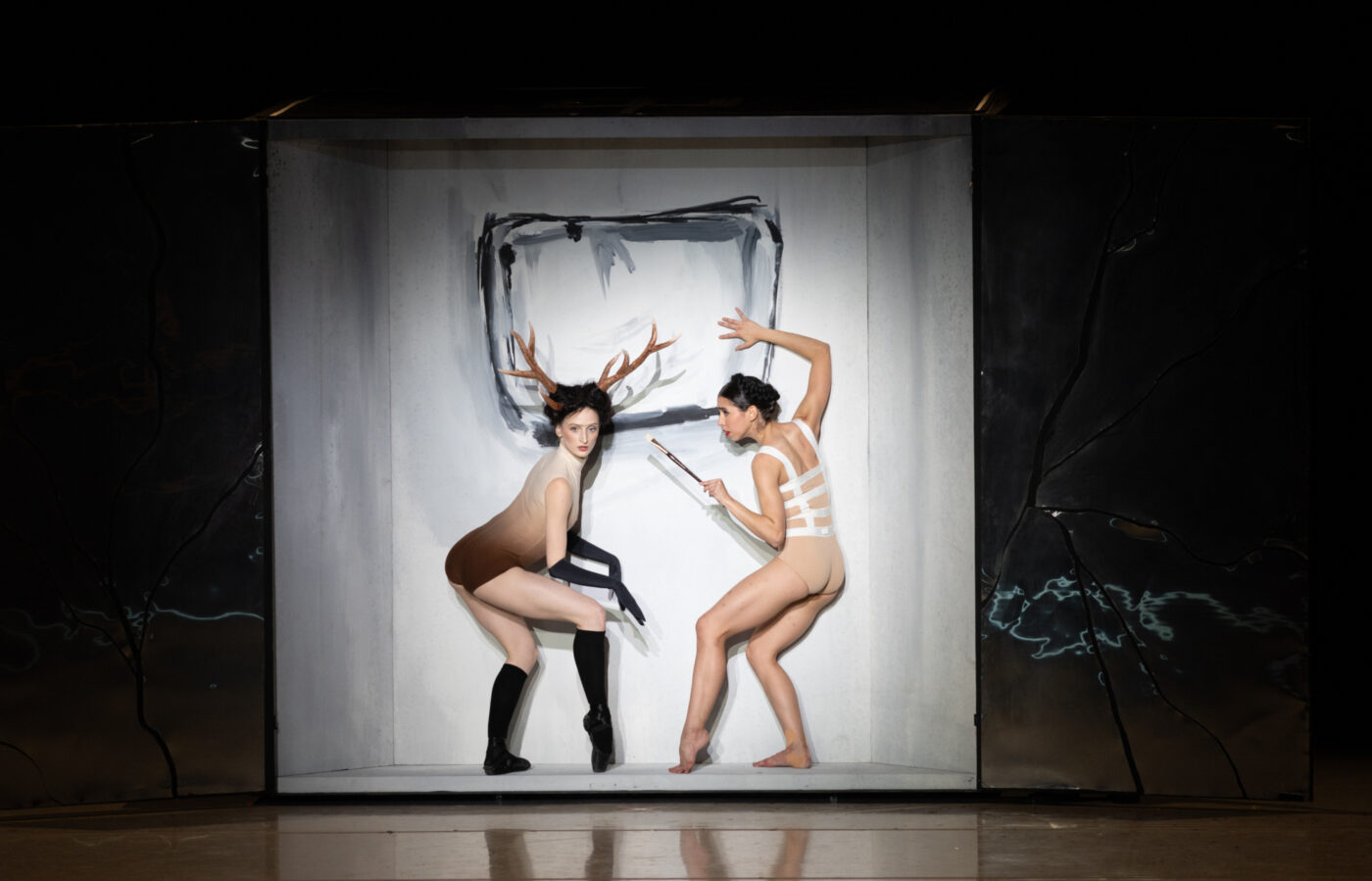
This can be a challenging aspect of composing. I chose to feature bassoons for the skeletons. They’re traditionally seen as comedic instruments, which wasn’t really what I was looking for but rather for a sound which would highlight the kind of energy the skeletons bring to a scene. When I wrote the music for the moment the skeletons first appear on stage and later saw Annabelle’s interpretation in the studio, I was relieved and delighted by the way sound and movement worked together to create the skeleton’s identity. We both shared a vision for portraying them energetically, and also with a degree of humor. It felt appropriate for them to serve as comic relief while simultaneously reminding us of death. For the deer, I aimed to embody the idiosyncratic movement of its head and twist of body and its role in supporting and calming Frida. It was more about capturing the character than getting too literal. And the birds? They’re vibrant and colorful. Sometimes you’ll hear real bird calls, and during hallucinatory moments, it’s as if you can hear the sounds of a million birds. The echoes of nature weave throughout the performance, often repeated through little rhythmic patterns.
Kahlo’s buoyant public persona often masked a more fractured private reality. How do you sonically differentiate between the two?
In the early scenes of the ballet the musical representation of young Frida is vibrant and positive, but after her accident there's a noticeable shift. Much of the color drains from the score as it also drains from her life during the early days of her hospitalization. Later her playful, flirtatiousness is represented by pizzicato strings and dance rhythms when she first meets Diego but dissonance and screaming clarinets when she witnesses his infidelities. The music certainly tries to capture the turmoil in Frida’s relationship with Diego, especially during the moments of their breakups. There are scenes that address Diego's infidelities and his betrayal involving Frida’s sister was devastating to her and I try to express this strongly in the score. Then there is her loneliness. When Frida was in New York with Diego in the early 1930s we feel her loneliness represented by sustained string chords and the ‘deer’ theme. Despite her growing reputation, being alongside the much more famous Diego Rivera she often felt ignored and alone. This is a solitude that people might not be aware of. Overall, the music frequently reflects the dark side, her pain, and the emotions she navigated throughout her life.
You’ve incorporated songs by Chavela Vargas, a close friend of Kahlo. How did her music influence or integrate into your composition?
Chavela Vargas’ songs are used at the most romantic moments in Diego and Frida’s relationship. They are songs of love and in the case of La Llorona tinged with sadness. They don’t directly influence my score, though the musical language and instrumentation (just guitars accompanying the voice) mean they inhabit the same sound-world enabling one to blend seamlessly into the other.
You’ve worked with Annabelle Lopez Ochoa on several high-profile ballets. Can you talk about your collaborative dynamic?
I can't quite pinpoint what it is, but Annabelle and I definitely share an aesthetic which means we don’t have to verbally communicate excessively! Neither of us likes to get too soft-edged or sentimental. We like to keep an edge; to keep things engaging but always strong. André Breton described Frida’s art as like a ribbon around a bomb. Which I guess is how we look at things! I really love Annabelle’s choreography, and that’s an understatement, it’s fantastic! I feel like I have a good sense of what she's going to do. Annabelle excels in theatre, and her choreography is just stunning; it’s direct and impactful without getting too complicated or self-indulgent. I believe we both understand what we want to express in every moment; each movement feels so purposeful and intentional. Fundamentally, the story of Frida captures the essence of someone who goes through suffering yet has a vibrant life force and boundless creativity. I hope we create a positive image of Frida Kahlo. The final moments of the ballet are not sad or glossy or sentimental but like a shaft of light, of pure creativity beaming into the future as a bird shimmers on a black box to the sound of building percussion.
Looking back, where did you take the greatest creative risk in this score, and did it change your understanding of Frida Kahlo herself?
On reflection, I’d say the biggest risk was the chance of this score turning into something that felt like a patronizing travelogue of Mexico. Thankfully, we never really felt it was in danger of falling into that trap. As for Frida Kahlo, I didn't know much about her before this, so I was constantly learning throughout the process. I began to appreciate the power of her art, her ability to communicate in such a direct and compelling way and to appreciate her as a person and artist who defied convention, presenting images never depicted in art before in a style that, whilst superficially attractive, is always run through with a core of steel.
See Frida Kahlo’s portrait unfold through music and movement on the Cobb Energy Centre stage from May 8–10, 2026. Performed live by the Atlanta Ballet Orchestra under the direction of Maestro Jonathan McPhee. Tickets are selling fast!