Behind the mask: A journey of emotion in Val Caniparoli's Aria
March 16, 2026
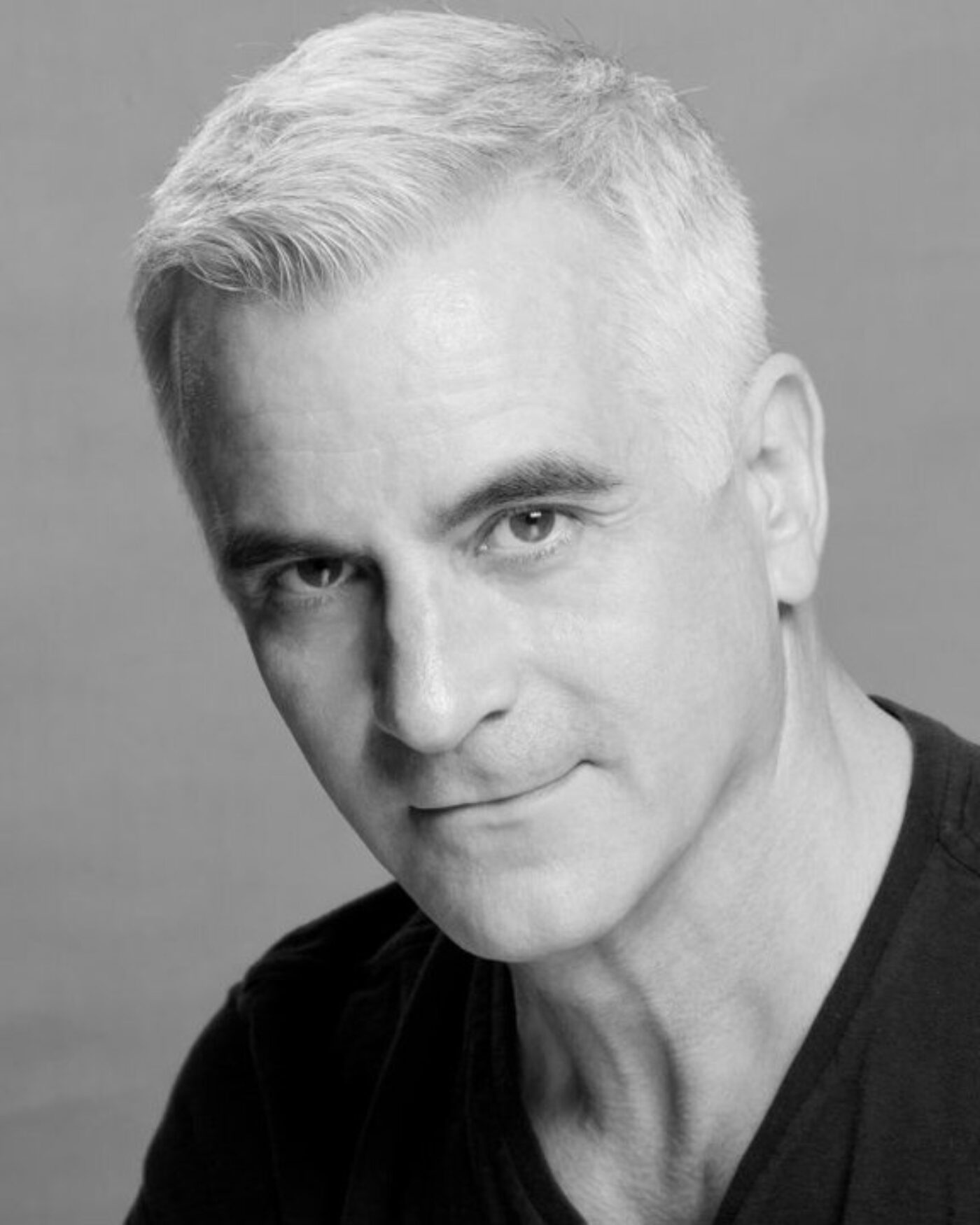
In the realm of contemporary ballet, Aria by choreographer Val Caniparoli stands out as a profound exploration of emotion and personal identity, intricately woven through the collaboration between choreographer and dancer. Inspired by Yuri Possokhov during his tenure at San Francisco Ballet, this solo for a male dancer encapsulates the inherent tension between concealment and freedom, facilitated by the use of a mask as a narrative device. With poignant operatic strains from Handel's Rinaldo underpinning its themes, Aria invites both performers and audiences on a journey that delves deep into the complexities of human experience, allowing for a strikingly intimate performance.
Atlanta Ballet spoke with Caniparoli during his recent visit to the studio.
Aria has been described as a poignant, emotionally stirring solo with controlled movement. Can you tell us about your vision for the work?
My vision for Aria was inspired by Yuri Possokhov, for whom the piece was choreographed during his time at San Francisco Ballet. He approached me with a request for choreography as he was preparing to perform at a gala event in Vancouver. Naturally, I agreed to help. Possokhov had a specific piece of music in mind and asked me to incorporate a particular aria from Handel’s Rinaldo. Together, we developed the piece based on that foundation.
Both Possokhov and I share a deep appreciation for ballets that incorporate elements of theatre and film, and he truly excels in this area. The inspiration for this piece primarily came from him. In the studio, we explored how to develop the theme, utilize the mask, and discover its significance without explicitly stating the source of our inspiration. Aria was fundamentally connected to Possokhov and the music he selected. I love it when a dancer or an artistic director asks if I’m interested in pursuing a particular type of work; my answer is always positive because I enjoy embracing these challenges. This project was particularly challenging for me due to Possokhov's inspiration and his choice of music. However, it wasn’t difficult to transform his inspiration into my own vision; Possokhov is an incredible dancer, very theatrical, and an exceptional collaborator in many ways.
What is the intended story, theme, or emotion of the solo?
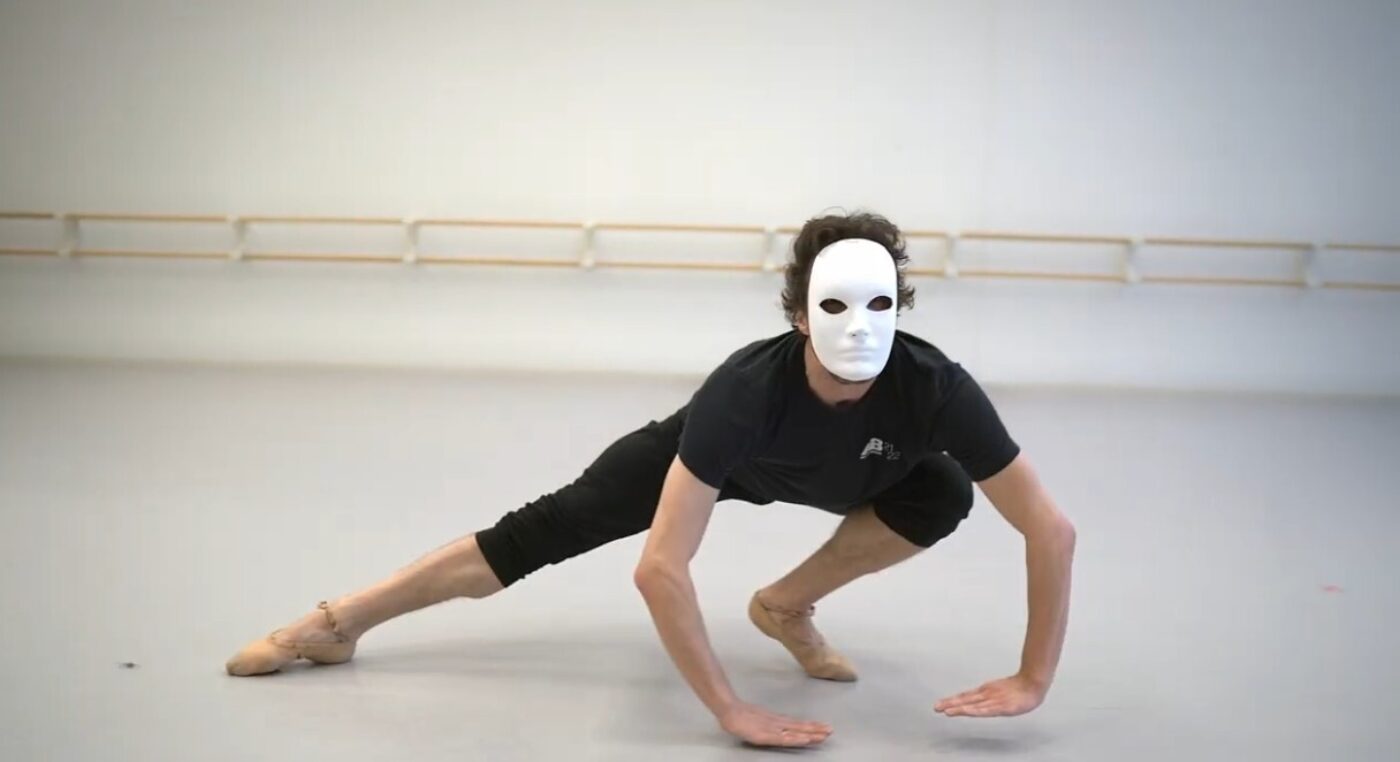
The intended theme emerged naturally as I worked through the process. Much of the theme was inspired by the words of the music, which convey a deep sadness. Words like ‘cruel, my life's fate, crying, and freedom’ played a significant role in shaping the mask's concept. I don’t dictate to the dancers exactly what they should feel or think while using the mask. Rather, I provide some guidelines. It’s a valuable tool for them to explore their inner selves and find personal meaning in the performance. Often, dancers experience the tension of hiding behind a mask while also seeking the freedom that comes with removing it. Ultimately, they return to their comfort level by putting the mask back on. By encouraging dancers to connect personally with the material, they take emotional ownership of the ballet. This ownership resonates with the audience because it's authentic, and the emotions expressed are genuine.
Dancers must also learn to project their emotions beyond the mask. This requires training in the studio, focusing on aspects like breath, movement, and body language. While their eyes may not be visible, they need to convey a sense of focus through the mask. It’s also deceptively difficult to breathe and perform effectively while wearing a mask. A lot of this work unfolds during the rehearsal process, where dancers learn to navigate these complexities.
So the mask is much more than a prop. Tell us more.
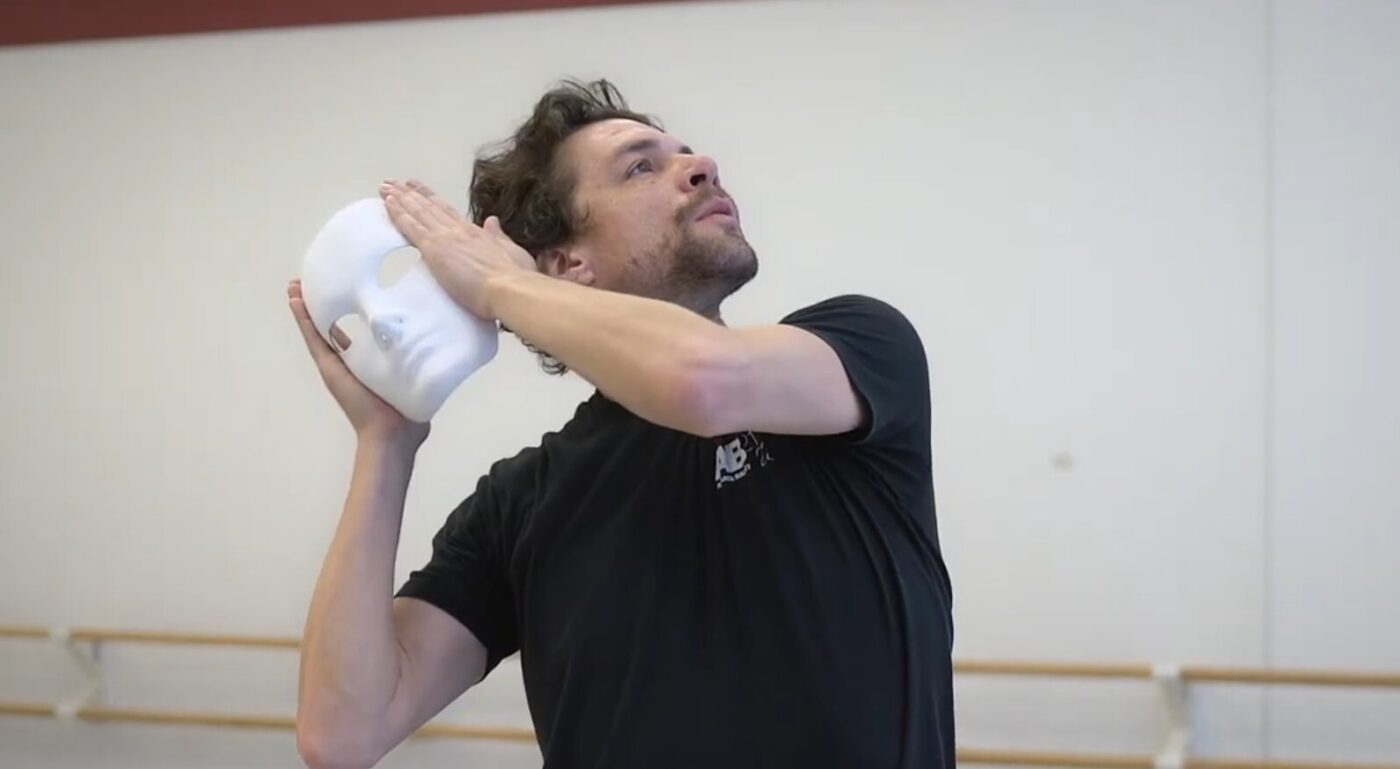
The mask becomes an integral part of the individual wearing it and represents another aspect of their personality. The mask can symbolize a prison, reflecting how one feels trapped in their environment and desires to break free. It can encapsulate a number of social themes and emotions. Ultimately, the mask is an extension of one's own identity. It should be seen as a representation of the dancer himself, embodying a dual personality.
Can you expand upon the choice of operatic strains from Handel's Rinaldo?
The choice of music was predetermined for me, and I found it relatively easy to make sense of it. The lyrics expressed remorse and conveyed internal feelings, which helped me in my work. Moreover, there is a section in the piece where there is no music at all; it is purely silent. For dancers, this silence requires a high level of control. I often describe it as a very ‘kabuki-esque’ style, relating to the use of masks and mime. Dancers sometimes struggle with the urge to move constantly; however, I believe that the best movement can often be no movement at all. Sometimes, the most effective expression comes from where your eyes look rather than from excessive motion. This can be one of the most challenging aspects for dancers to master. A significant part of the studio work involves embracing silence, maintaining control, and avoiding overstated actions.
How does the choreography showcase the dancer's strengths? And what is it like to work with Atlanta Ballet dancers?
I believe that this ballet significantly aids in the development of dancers. It’s not just about movement; there is meaning behind each gesture. You embody a character for the duration of the seven-minute piece, requiring you to maintain control entirely on your own. There’s no one behind you and no props aside from the mask. I believe this experience is particularly beneficial for dancers because it encourages them to discover profound personal meaning in their movement. I always tell dancers that my favorite movements aren’t the turns or jumps themselves, but rather what you do before the turn, how you breathe after it, and your motivation leading up to the jump. It’s essential to express yourself in complete thoughts rather than in choppy phrases; everything should flow together seamlessly. Dancers seem to really enjoy this process, as they are entirely responsible for their performance.
This is actually my second time working with Atlanta Ballet. It’s great to be back in Atlanta, and I knew the dancers would be fantastic. The three male dancers I'm working with on Aria have been outstanding and are putting in a lot of hard work. Additionally, I danced with Gennadi Nedvigin at San Francisco Ballet, so there’s a unique connection between us that is quite exciting.
In a recent interview with Atlanta Ballet, Yuri Possokhov spoke with fond memories and thanked you for creating this piece for him. How personal is Aria to you, and how does it feel to work with Yuri again, albeit in an indirect way, in Atlanta?
It's funny that you mention this because I’m still working with Yuri Possokhov! When I return to San Francisco Ballet, I will be performing in Don Quixote. Possokhov has been a significant part of my journey since he joined San Francisco Ballet in the 1990s. It’s always wonderful to come back and work with him in any capacity. Watching him grow as a choreographer has been remarkable. We have a strong connection, so working together on the same program here in Atlanta is exhilarating.
And finally, what excites you the most about Atlanta Ballet's premiere of Aria?
I really appreciate that Nedvigin chose this ballet for the season retirement of company dancer Denys Nedak. And while I am here, other dancers are learning the role as well. I’m really looking forward to Nedak’s performance as I have thoroughly enjoyed working with him. His maturity and sense of professionalism in the studio have been remarkable, making it an amazing collaborative experience.
Aria is presented as part of the Golden Hour mixed repertoire program at the Cobb Energy Centre, April 3-5, 2026. Don’t miss this theatrical solo by Val Caniparoli, alongside works from Yuri Possokhov, Claudia Schreier, and Christopher Wheeldon. Learn more at atlantaballet.com.